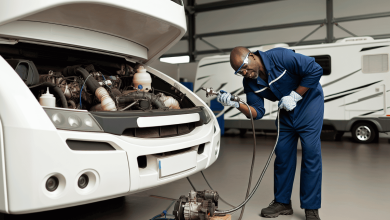
What Keeps A Boat Alive Long After The Dock Lines Are Cast Off

Every boat has a story. Some begin as showroom dreams, gleaming and untouched. Others carry decades of salt, sun, and memories etched into every fitting and bolt. What connects them all is not just craftsmanship or design, but the unseen network of marine sales, service, and parts that keeps them moving year after year.
Boating culture often celebrates freedom, open water, and adventure, but rarely does it acknowledge the quiet discipline behind reliability. Engines do not maintain themselves. Systems do not magically stay aligned. Parts do not replace themselves when wear finally wins. Behind every successful voyage is a series of decisions made long before the boat ever leaves the marina.
From First Turn of the Key to Years of Use
For many owners, the relationship with marine sales begins with excitement and optimism. Choosing an engine or propulsion system is not just a technical decision. It is a commitment to how the boat will be used, how often it will run, and how much attention it will demand over time.
Experienced marine professionals understand that the right choice is rarely the biggest or the most powerful. It is the option that matches the owner’s habits, cruising style, and expectations. A boat used for long offshore runs needs a different heart than one that sees short weekend outings. Getting that decision right shapes everything that follows.
Over time, sales becomes less about acquisition and more about evolution. Owners reassess needs, upgrade systems, or repower vessels that still have plenty of life left in them. In these moments, guidance matters more than persuasion.
Service as a Long-Term Relationship
If sales sets the direction, service defines the journey. Marine engines live in one of the most unforgiving environments imaginable. Saltwater creeps into places it should not be. Heat, vibration, and moisture test every seal and component. Even boats that look pristine can hide early signs of wear.
Routine service is not about fixing what is broken. It is about understanding what is changing. Skilled marine technicians develop an almost intuitive sense for engines. They listen differently. They notice patterns that software alone cannot detect. Over time, they come to know a vessel the way a doctor knows a long-term patient.
This relationship builds confidence. Owners trust that someone is paying attention when they are not. Service visits become checkpoints, moments to course-correct before small issues grow into costly failures.
Parts as the Unsung Heroes
Parts rarely get the attention they deserve. They are small, unglamorous, and often invisible once installed. Yet they are the difference between a smooth season and a frustrating one.
Marine parts are not interchangeable commodities. Materials, tolerances, and design details matter far more on the water than on land. Using the wrong component can compromise performance or shorten the life of surrounding systems.
A strong parts operation understands this. It is less about shelves and more about knowledge. Knowing which revision fits which engine. Understanding which upgrades solve recurring issues. Anticipating what will be needed before peak season arrives.
When parts are sourced correctly and installed properly, boats spend more time moving and less time waiting.
When Boats Age, Stories Deepen
As vessels age, their needs change. Systems that once ran effortlessly require closer attention. Owners face choices about repair, replacement, or reinvention.
This is where marine sales, service, and parts converge most clearly. Repowering an older boat is not about restoring youth. It is about extending relevance. A well-maintained hull paired with a modern engine can outperform expectations and redefine what the boat can do.
These projects require coordination, patience, and trust. They also require professionals who see beyond transactions and understand the emotional connection owners have with their boats.
For many, repowering marks a new chapter rather than an ending.
Technology Changes, Fundamentals Do Not
Modern marine systems are increasingly digital. Engines communicate through data streams. Diagnostics arrive on screens instead of gauges. Maintenance schedules are informed by usage metrics rather than guesswork.
Yet the fundamentals remain unchanged. Salt still corrodes. Heat still stresses components. Water still finds its way into places it should not be.
Technology enhances decision-making, but it does not replace experience. The best marine professionals blend modern tools with traditional instincts, ensuring that innovation supports reliability rather than complicating it.
Why Trust Matters on the Water
On land, a breakdown is inconvenient. On the water, it can be dangerous. This reality shapes how boat owners think about maintenance and support.
Trust is built slowly. It comes from consistent outcomes, clear communication, and honesty about what is needed now versus what can wait. Marine businesses that understand this earn loyalty that lasts for decades.
Owners return not because of branding, but because of confidence. Confidence that recommendations are sound. Confidence that work is done correctly. Confidence that someone stands behind the result.
Within this ecosystem, familiarity with established engine platforms such as Cummings marine can be valuable, not as a selling point, but as a foundation for predictable service, parts availability, and long-term planning.
The Rhythm of a Boating Life
Boating follows a rhythm. Preparation. Use. Maintenance. Reflection. Each season builds on the last. Marine sales, service, and parts support this rhythm quietly, consistently, and often without recognition.
They show up before the season begins and after it ends. They solve problems most owners never see and prevent failures that never make headlines.
In doing so, they protect something larger than machinery. They protect experiences. Family traditions. Personal milestones. Long days that begin before sunrise and end with salt on the skin and stories worth telling.
More Than Mechanics
At its best, the marine industry understands that boats are not just assets. They are platforms for memory. The role of sales, service, and parts is not to dominate that story, but to support it.
When done well, this work fades into the background, exactly where it belongs. The engine runs. The systems respond. The journey unfolds as planned.
And that is the highest compliment the marine world can receive.