Health
Cold Plunges and Infrared Saunas: The Science Behind Contrast Therapy
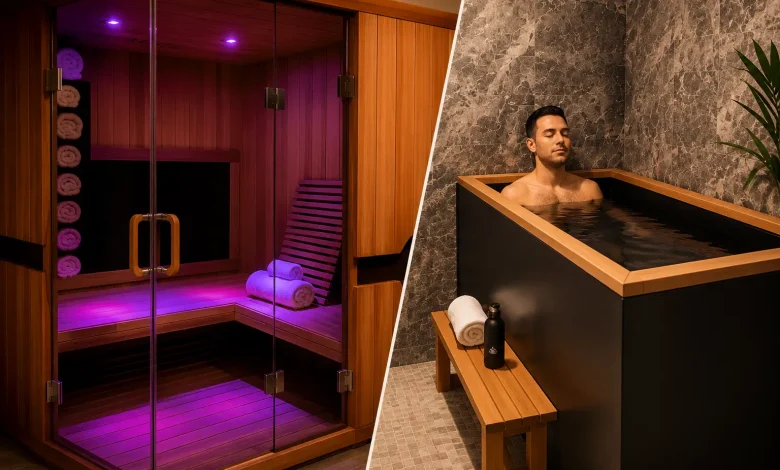
Step out of an enclosure radiating dry, penetrating heat at 140 degrees Fahrenheit and lower yourself shoulder-deep into a tub of 48-degree water, and your body mounts an immediate, visceral survival response. Your skin prickles, your breathing hitches, and your heart rate recalibrates within seconds. While the sudden transition from extreme warmth to biting cold feels like an intense test of willpower, beneath the surface lies one of the most effective ways to challenge and condition human physiology.
Contrast therapy is far from a modern novelty. Civilizations across centuries, from Roman bathhouses and Russian banias to Finnish saunas followed by rolls in the snow, recognized the restorative effects of alternating thermal extremes. Today, the pairing of infrared saunas and cold plunges has refined this ancient intuition into a targeted bio-mechanical practice. By stripping away the mysticism and examining the cellular, vascular, and neurochemical events that occur during these rapid transitions, we can understand why subjecting the body to controlled environmental stress yields profound benefits for recovery, circulation, and mental resilience.
The Vascular Pump: How Thermal Extremes Drive Circulation
The central mechanical principle of contrast therapy is vascular manipulation. Blood vessels are lined with smooth muscle tissue that responds dynamically to temperature shifts, creating an involuntary circulatory mechanism often described as a biological vascular pump.
When you enter an infrared sauna, your core body temperature rises, triggering vasodilation. Blood vessels near the surface of the skin widen dramatically to dissipate heat, allowing peripheral blood flow to surge. This redirecting of blood toward the skin and extremities lowers systemic vascular resistance, relaxes arterial walls, and causes the heart to beat faster to maintain arterial pressure.
Plunging into freezing water immediately reverses this cascade. Thermoreceptors in the skin register the precipitous temperature drop and fire urgent signals to the sympathetic nervous system, inducing rapid vasoconstriction. The peripheral vessels clamp shut, shunting blood away from the extremities and pooling it deep within the torso to protect vital organs and preserve core thermal stability.
Alternating between these opposing states forces the circulatory and lymphatic systems through repeated expansion and contraction cycles. Unlike the cardiovascular system, which relies on the heart to pump blood, the lymphatic system has no central mechanical pump of its own. It relies primarily on muscular movement, respiration, and external pressure variations to circulate lymph fluid. The alternating compression and decompression driven by contrast therapy encourages the clearance of metabolic waste products, reduces interstitial fluid stagnation, and drives nutrient-dense, oxygenated blood back into fatigued tissues once normal temperatures return.
Infrared Heat: Cellular Stress and Mitochondrial Adaptation
Traditional saunas rely on heated air or steam to warm the body from the outside in, often creating an environment between 180 and 200 degrees Fahrenheit that some find difficult to tolerate for sustained periods. Infrared saunas utilize invisible light waves—predominantly far-infrared and mid-infrared spectra—that penetrate soft tissue directly up to an inch and a half beneath the dermal barrier. This allows for deep, core-level heating at milder ambient temperatures, typically between 120 and 150 degrees Fahrenheit.
This sustained thermal stress initiates several protective cellular processes:
-
Heat Shock Proteins (HSPs): As core temperature rises, the body synthesizes specialized chaperone molecules known as heat shock proteins. When muscle fibers and cells experience stress, internal proteins unfold, misfold, or clump together, impairing cellular performance. HSPs seek out these damaged proteins, repairing their structural configuration or tagging irreversibly degraded proteins for disposal. This cellular housekeeping preserves muscle integrity and bolsters cellular resilience against future physiological stressors.
-
Cardiovascular Mirroring: An extended session in an infrared sauna mimics moderate aerobic exercise. Heart rates often elevate to 110 to 140 beats per minute, cardiac output expands, and blood flow velocity increases. This mechanical shear stress against the inner lining of arteries stimulates endothelial nitric oxide production, a vital molecule that maintains arterial elasticity and supports healthy baseline blood pressure.
-
Endocrine Modulation: The gentle sustained heat helps downregulate chronic cortisol spikes while encouraging the release of dynorphins, compounds that initially create a feeling of mild dysphoria or discomfort under heat, followed by an upregulation of sensory endorphin receptors once the session ends.
The Cold Shock: Neurotransmitters, Hormones, and Brown Fat
If heat induces a state of active cellular expansion and repair, cold delivers a sharp, clarifying shock that reorganizes the nervous system.
Submerging into water below 55 degrees triggers the cold shock response, driven by cutaneous cold receptors. The immediate consequence is a massive surge in circulating norepinephrine and epinephrine. Norepinephrine acts as both a hormone and a central neurotransmitter, playing an indispensable role in vigilance, sustained focus, and mood regulation. This flood of catecholamines can spike several hundred percent above baseline and remain elevated for hours following the plunge, contributing to the prolonged state of calm alertness familiar to cold water practitioners.
Simultaneously, cold exposure triggers the activation of brown adipose tissue (BAT), often called brown fat. Unlike standard white adipose tissue, which serves primarily to store excess caloric energy, brown fat is packed with iron-rich mitochondria and specializes in non-shivering thermogenesis. When exposed to severe cold, brown fat utilizes intracellular fatty acids and glucose to produce pure heat through the uncoupling of cellular respiration. Regular cold immersion increases the metabolic activity and density of brown fat, improving systemic insulin sensitivity and resting metabolic expenditure over time.
Beyond biochemical markers, cold immersion trains autonomic control. The initial instinct upon entering freezing water is hyperventilation, elevated muscle tension, and panic. Consciously taking slow, controlled breaths during this initial shock forces the prefrontal cortex to exert top-down inhibition over the primitive limbic system, building a transferable tolerance to acute physical and psychological stress.
Managing the Inflammatory Paradox
While contrast therapy is renowned for speeding physical recovery, applying it effectively requires an understanding of the inflammatory cascade. Inflammation is frequently treated as an absolute negative that must be suppressed at all costs, yet acute inflammation is the primary biological signal that drives tissue remodeling, strength gains, and muscular hypertrophy.
When muscle fibers undergo strenuous eccentric loading, micro-tears generate localized swelling and attract immune cells to rebuild the tissue stronger. Stepping directly into a cold plunge immediately following heavy resistance training halts blood flow, curtails swelling, and blunts downstream signaling pathways responsible for protein synthesis.
For athletes whose primary goal is building maximal muscle mass, intense cold water immersion directly post-lift can interfere with optimal gains. However, during periods where rapid recovery between competitive bouts matters far more than long-term adaptation—such as tournament play, consecutive race days, or high-volume endurance phases—the anti-inflammatory and pain-relieving effects of cold immersion provide an invaluable performance edge.
Contrast therapy offers a balanced middle ground. Because the cold exposure is buffered by periods of vasodilation from the infrared heat, tissue blood flow is not shut down indefinitely. The mechanical flushing alleviates perceived muscle soreness and reduces excessive swelling without completely neutralizing the biological signaling pathways required for general fitness adaptation.
Designing an Effective Contrast Protocol
To build a routine that yields measurable results rather than arbitrary exhaustion, you need consistent parameters for temperature, timing, and sequence.
Temperature Baselines and Duration
Set the infrared sauna between 130 and 150 degrees Fahrenheit. A typical heat exposure should last between 15 and 20 minutes to allow the light waves to warm deep musculoskeletal tissues and induce thorough perspiration.
The cold plunge should be kept between 45 and 55 degrees Fahrenheit. Beginners should aim for 1 to 2 minutes per immersion, while experienced practitioners rarely need more than 3 to 5 minutes per cycle to achieve full systemic vasoconstriction. Remaining in near-freezing water past this threshold offers diminishing physiological returns and increases the risk of hypothermic drop.
The Contrast Cycle
A standard contrast session consists of alternating rounds between heat and cold:
-
Start with an initial 15-minute warmup in the infrared sauna to raise peripheral blood flow and relax joint tissues.
-
Step directly into the cold plunge for 2 to 3 minutes, focusing on steady, rhythmic exhalations.
-
Return to the sauna for 10 to 12 minutes to rewarm the body and reactivate peripheral circulation.
-
Repeat this cycle two to three times.
Choosing How to End the Session
The decision of whether to end on hot or cold depends directly on your immediate objective:
-
Ending on Cold: Concluding your session in the cold plunge forces your body to generate its own heat naturally through non-shivering thermogenesis, maximizing the activation of brown adipose tissue, keeping metabolic rates elevated, and sustaining the post-plunge norepinephrine boost for heightened daytime energy.
-
Ending on Heat: Concluding in the infrared sauna leaves your blood vessels dilated, lowers resting muscle tone, and activates the parasympathetic rest-and-digest branch of the nervous system. This makes ending on heat ideal for evening sessions intended to unwind and prepare for restorative sleep.
Safe Adaptation and Best Practices
Contrast therapy places real demands on the cardiovascular system through rapid, cyclical fluctuations in blood pressure and heart rate. Individuals with existing cardiovascular conditions, unmanaged hypertension, or microvascular disorders should approach extreme thermal shifts with caution and medical guidance.
For healthy individuals, adaptation should be progressive. Begin with conservative cold temperatures around 55 to 60 degrees and brief intervals before working down toward lower numbers. Hydration is equally critical: sweating in an infrared sauna depletes water and essential electrolytes, while cold-induced diuresis signals the kidneys to clear fluids rapidly. Drinking water supplemented with sodium, magnesium, and potassium both before and after contrast therapy prevents cramping, lightheadedness, and systemic fatigue.
Subjecting the body to opposing thermal extremes reminds dormant biological systems how to react, regulate, and recover. By cycling between the cellular defense mechanisms activated by deep infrared heat and the sharp neurochemical recalibration brought on by cold immersion, contrast therapy transforms environmental stress into a deliberate tool for sustained physical vitality.