Don’t Let A Drip Derail The Dream: What RV Owners Need To Know About Roof Damage
If you’ve ever watched storm clouds roll in while camped miles from town, you know the unique anxiety RV owners feel. Rain isn’t just an inconvenience. It’s a potential disaster. One tiny crack or weakened seal in an RV roof can lead to slow, sneaky water damage that threatens not just comfort but safety—and for full-time RVers, it threatens their home.
Among all the maintenance tasks an RV demands, roof repair is one of the most critical and often the most overlooked. That’s because the early signs of damage are easy to miss. Unlike a car tire or an engine light, roof issues develop quietly. You might not notice them until it’s too late and water has already seeped through the insulation or warped the ceiling panels.
So how do you stay ahead of problems that literally hang over your head? It starts with understanding your roof.
What’s on Top Matters More Than You Think
Most RV roofs fall into one of three categories: rubber, fiberglass, or aluminum. Rubber is by far the most common, particularly in modern motorhomes and trailers, with EPDM (ethylene propylene diene monomer) and TPO (thermoplastic olefin) being the two main types.
Rubber roofs are flexible, lightweight, and relatively inexpensive to manufacture. But they also degrade over time due to UV exposure, debris, and weather cycles. Even without obvious punctures, the rubber can dry out, crack, or pull away from seams. That’s when water finds its way in.
Fiberglass roofs are more rigid and less prone to tears, but they can still develop hairline cracks or delaminate with age. Aluminum roofs, though rare in newer models, are tough but tend to be noisy in rain and harder to insulate.
Knowing your roof type helps you choose the right sealants, patch kits, and cleaning materials. Using the wrong product can do more harm than good. For example, certain cleaners can deteriorate EPDM membranes, turning a small fix into a full replacement.
How Water Sneaks In
The most common entry points for water are not in the middle of the roof but around its edges—vents, skylights, antennas, air conditioning units, and solar panel brackets. These are all potential leak zones. Seals and gaskets around these fixtures degrade over time, especially when exposed to constant sun and changing temperatures.
While a hole or tear is an obvious problem, what’s more dangerous is a slow leak that spreads over weeks or months. Moisture can travel along the roof under the membrane, soaking insulation or wooden panels before it ever becomes visible inside. By the time you see staining on your ceiling, the damage may already be extensive.
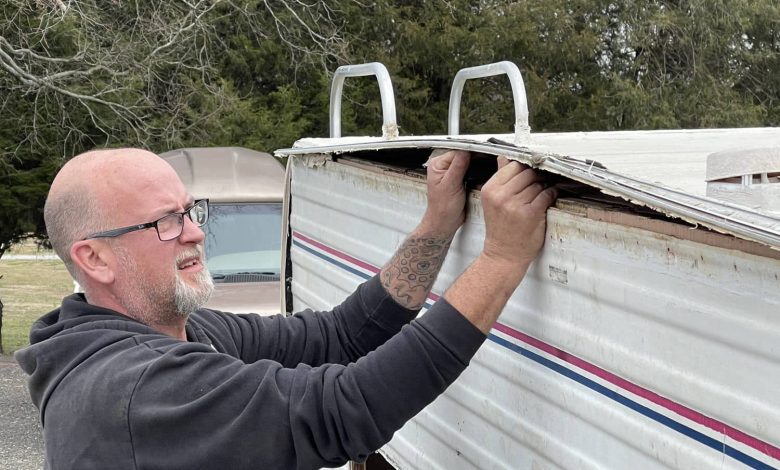
Routine inspection is the best defense. Many RVers do a full roof check every season, if not more often. It only takes a few minutes to climb up, look for cracks or bubbles, and feel for soft spots. Catching issues early is the difference between a quick reseal and a structural rebuild.
DIY or Professional Help?
For many RV owners, RV roof repair starts with a tube of sealant. Self-leveling lap sealants are a popular choice for patching around fixtures and seams. They’re easy to apply and do a good job of conforming to uneven surfaces. For small punctures or cracks, patch kits made specifically for rubber roofs can work well—if applied correctly.
The DIY route is cost-effective and often practical for minor issues. However, larger problems like sagging roof membranes, recurring leaks, or extensive water damage often require professional intervention. A certified RV technician can peel back layers, replace damaged panels, and reseal the entire surface with the proper materials.
Some shops now offer full roof re-coating services, where they apply a new protective layer over the existing roof. This can add years of life and even improve energy efficiency by reflecting sunlight better than aged materials.
Preventing Damage Before It Starts
One of the best ways to avoid RV roof repair is to adopt a proactive approach. Start by cleaning the roof regularly. Dirt and debris not only degrade the surface but also hide problem areas. Use a gentle cleaner and a soft-bristle brush to avoid tearing the membrane.
When parking your RV for extended periods, try to position it away from trees. Falling branches and constant shade can both lead to trouble. If storage is part of your RV lifestyle, investing in a breathable cover helps shield the roof from UV rays and debris without trapping moisture underneath.
Another smart habit is checking the roof after every major storm or long road trip. High winds can shift components, and vibrations can loosen seals over time. A quick visual inspection may save you from discovering a leak during your next vacation.
What Happens If You Ignore It
Delaying roof repairs can have serious consequences. Water damage doesn’t stay on the surface. It spreads. It weakens supports, ruins insulation, and invites mold and mildew. In some cases, it can compromise the entire structure, making the RV unsafe to drive or live in.
Even cosmetic damage like warped ceiling panels or peeling wallpaper is often just the tip of the iceberg. Replacing these elements is costly, especially if the leak isn’t fixed and problems keep recurring.
Insurance may cover some water damage, but many policies have clauses about maintenance. If it’s determined that the leak was due to owner negligence, claims might be denied. That means staying on top of roof care is not just about convenience—it’s about protecting your investment.
Roof Upgrades: Worth Considering
If your RV is older or you’re planning long-term travel, it might be worth exploring upgrade options. Some RVers choose to replace their roof with a more durable material or add solar panel mounts with reinforced brackets to prevent future issues.
Others opt for roof coatings designed to extend the life of the existing surface. These coatings, typically silicone or acrylic, create a seamless, waterproof layer over the roof. When applied correctly, they can fill micro-cracks and prevent UV damage. It’s not a fix for structural problems, but it’s an excellent preventative step.
Peace of Mind Rides on a Solid Roof
No matter how luxurious or rugged your RV is, everything depends on the integrity of the roof. It’s your shield against the elements and the barrier between you and a world of expensive repairs. Taking care of it isn’t just another chore on the checklist. It’s one of the smartest things you can do as an RV owner.
Whether you handle the work yourself or call in the pros, making RV roof repair a priority will keep you on the road longer and with fewer surprises. Because when your adventures depend on the roof over your head, it pays to keep it watertight, sealed, and ready for whatever the sky sends your way.